
 Image 1 of 2
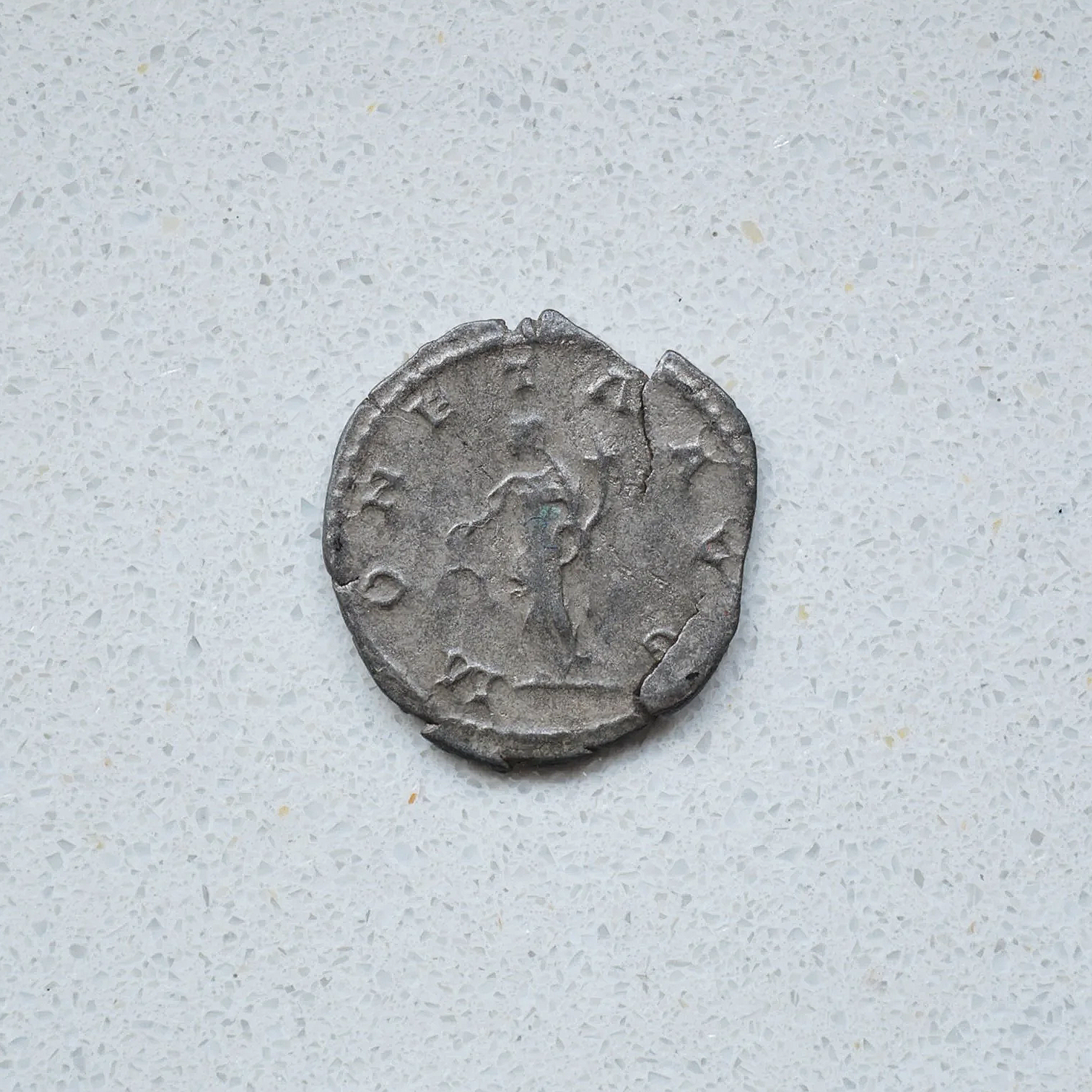 Image 2 of 2
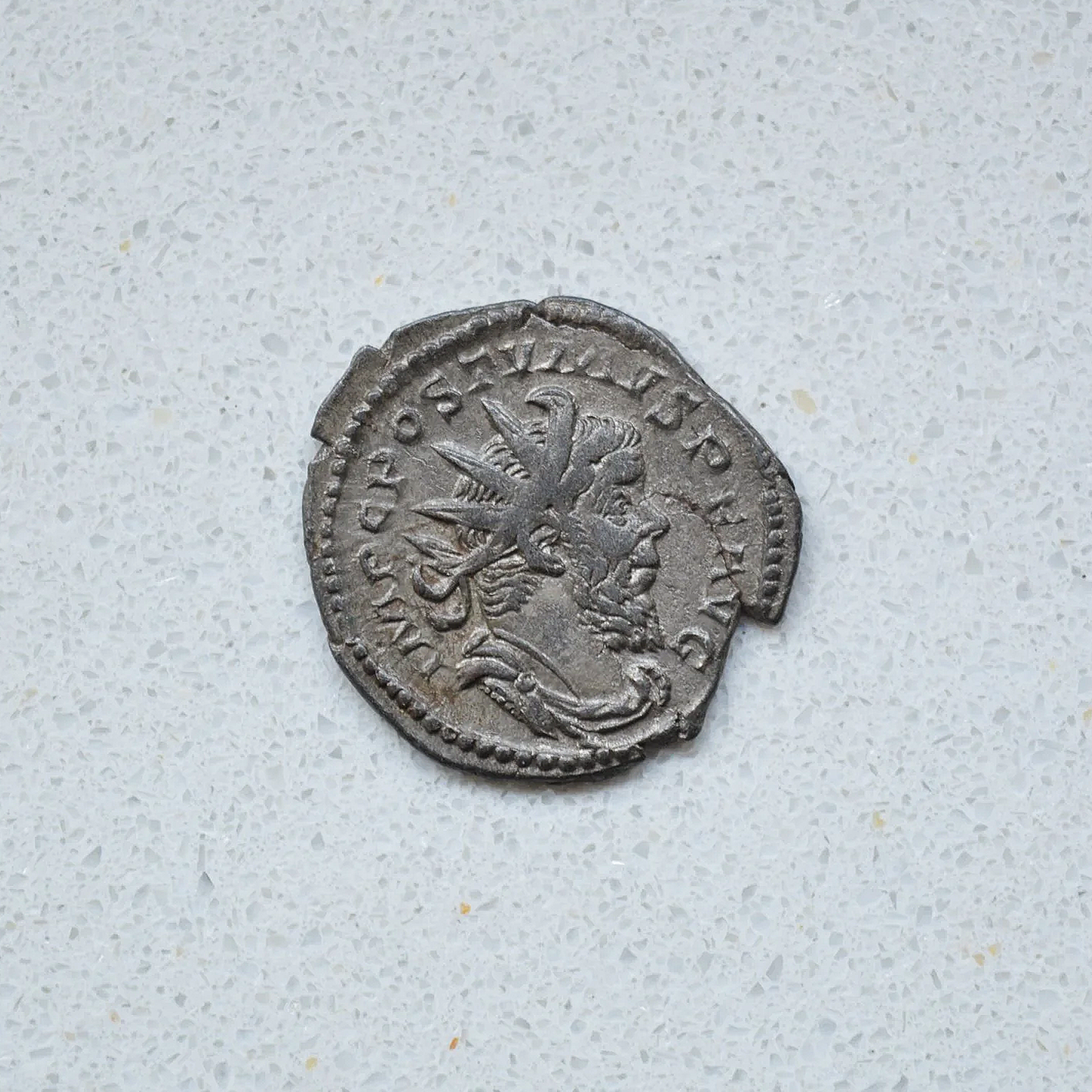
Offered is an interesting Moneta-type (MONETA AVG) billon silver Antoninianus struck at Colonge under the reign of the usurper-Emperor Postumus in 262-65AD, Sear#10962, RIC#75, RSC#199, Hunter#60. It has been noted that Postumus took personal interest in his coinage (no doubt realizing its potential to project power and legitimacy), with conscious efforts made to outdo Gallienus’ coinage in terms of both purity and workmanship. Taken by the numbers alone, one can see that this concerted effort was a success, with Antoniniani of Postumus averaging 15-20% silver purity, while those of Gallienus barely managing 5%. The personification of Moneta on this piece is certainly a nod to the Emperor’s obsession with his coinage.
This coin bears a strong obverse portrait, and very good detail with only light circulation. Indeed, the iridescent grey patina of this example betrays underlying lustre - some of which is still visible at the devices. It likely only traded hands briefly before being deposited in what would later become known as the ‘Oliver’s Orchard’ hoard, discovered at Colchester in 1983 (later released by the coroner and dispersed). This lovely coin will come accompanied by an old collector’s card attesting to this provenance.
Offered is an interesting Moneta-type (MONETA AVG) billon silver Antoninianus struck at Colonge under the reign of the usurper-Emperor Postumus in 262-65AD, Sear#10962, RIC#75, RSC#199, Hunter#60. It has been noted that Postumus took personal interest in his coinage (no doubt realizing its potential to project power and legitimacy), with conscious efforts made to outdo Gallienus’ coinage in terms of both purity and workmanship. Taken by the numbers alone, one can see that this concerted effort was a success, with Antoniniani of Postumus averaging 15-20% silver purity, while those of Gallienus barely managing 5%. The personification of Moneta on this piece is certainly a nod to the Emperor’s obsession with his coinage.
This coin bears a strong obverse portrait, and very good detail with only light circulation. Indeed, the iridescent grey patina of this example betrays underlying lustre - some of which is still visible at the devices. It likely only traded hands briefly before being deposited in what would later become known as the ‘Oliver’s Orchard’ hoard, discovered at Colchester in 1983 (later released by the coroner and dispersed). This lovely coin will come accompanied by an old collector’s card attesting to this provenance.