
 Image 1 of 2
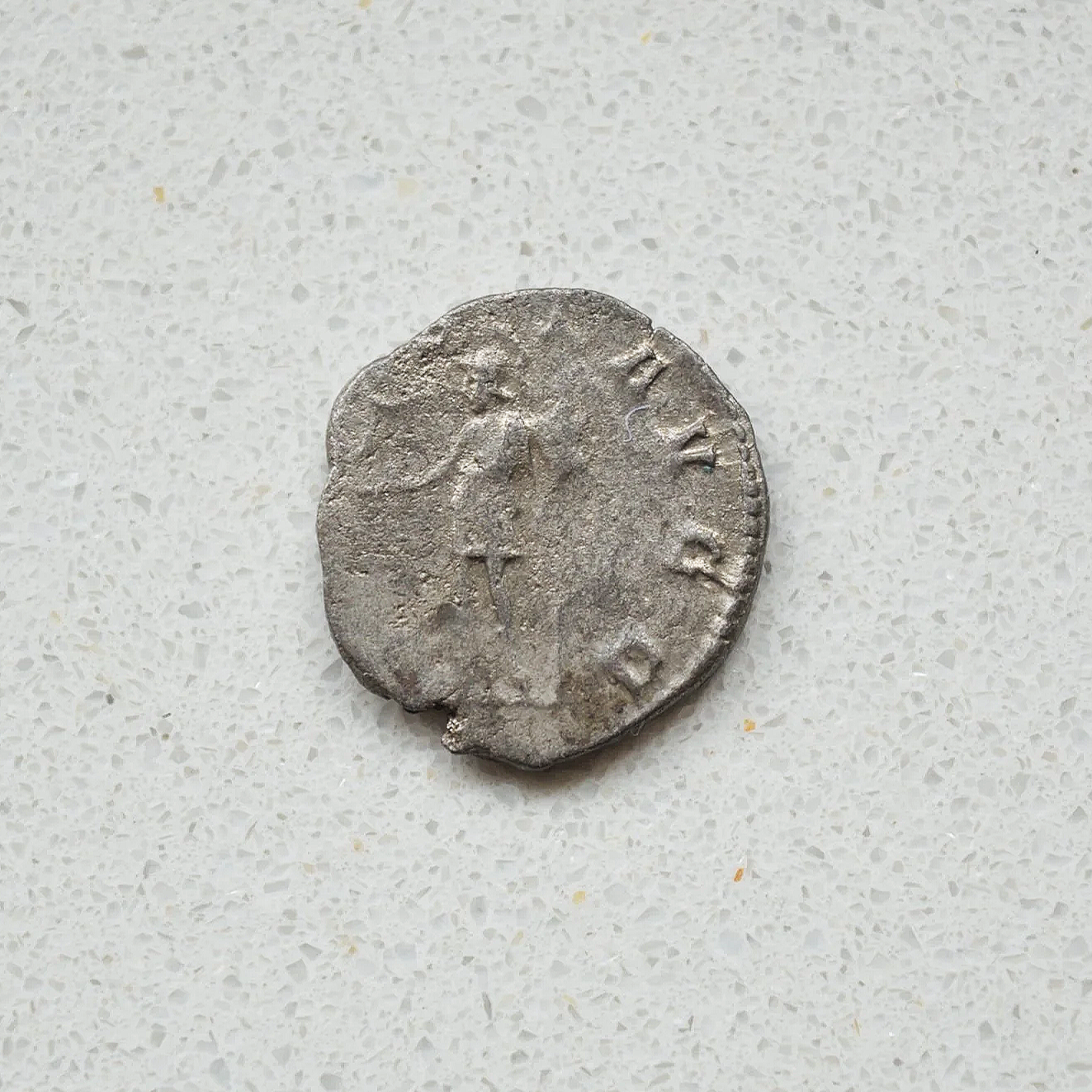 Image 2 of 2
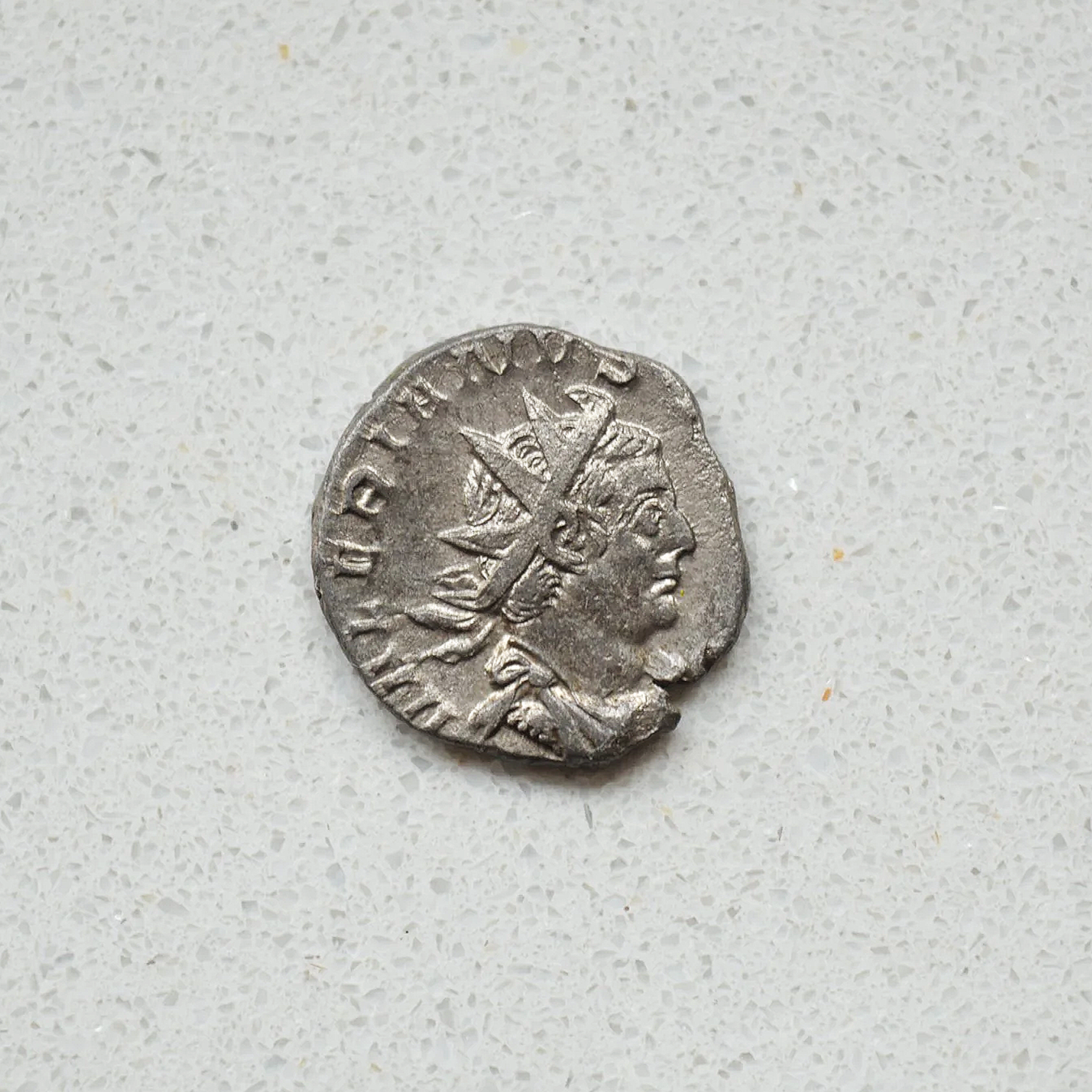
Offered is a rare variety of the Virtus-type Antoninianus, struck at Trier under the reign of Emperor Valerian in 258, being the VIRTVS AVGG reverse paired unusually with the VALERIANVS P F AVG obverse, unlisted in either Sear or RIC, Bourdel#391, Gobl#887a, Eauze#1458, Elmer#76. Absent from many major works, most of the aforementioned references actually draw on the same couple of specimens. We have only managed to trace about 6 others (as opposed to hundreds bearing the IMP CPL LIC VALERIANVS obverse), with most falling well below this example in terms of strike and grade.
Indeed, this coin, although struck on a small, somewhat irregular flan, retains excellent portrait detail despite some weakness to the reverse. An iridescent grey patina betrays some hints of lustre clinging to the devices, lending this higher-grade example considerable eye-appeal. Of note is that this particular coin emanates from the ‘Oliver’s Orchard’ discovered in Colchester (UK) in 1983 (later released by the coroner and dispersed), and comes accompanied by an old collector’s card stating this provenance. An appealing example of a rare type bearing an excellent provenance - what more can one ask for?
Offered is a rare variety of the Virtus-type Antoninianus, struck at Trier under the reign of Emperor Valerian in 258, being the VIRTVS AVGG reverse paired unusually with the VALERIANVS P F AVG obverse, unlisted in either Sear or RIC, Bourdel#391, Gobl#887a, Eauze#1458, Elmer#76. Absent from many major works, most of the aforementioned references actually draw on the same couple of specimens. We have only managed to trace about 6 others (as opposed to hundreds bearing the IMP CPL LIC VALERIANVS obverse), with most falling well below this example in terms of strike and grade.
Indeed, this coin, although struck on a small, somewhat irregular flan, retains excellent portrait detail despite some weakness to the reverse. An iridescent grey patina betrays some hints of lustre clinging to the devices, lending this higher-grade example considerable eye-appeal. Of note is that this particular coin emanates from the ‘Oliver’s Orchard’ discovered in Colchester (UK) in 1983 (later released by the coroner and dispersed), and comes accompanied by an old collector’s card stating this provenance. An appealing example of a rare type bearing an excellent provenance - what more can one ask for?