
 Image 1 of 2
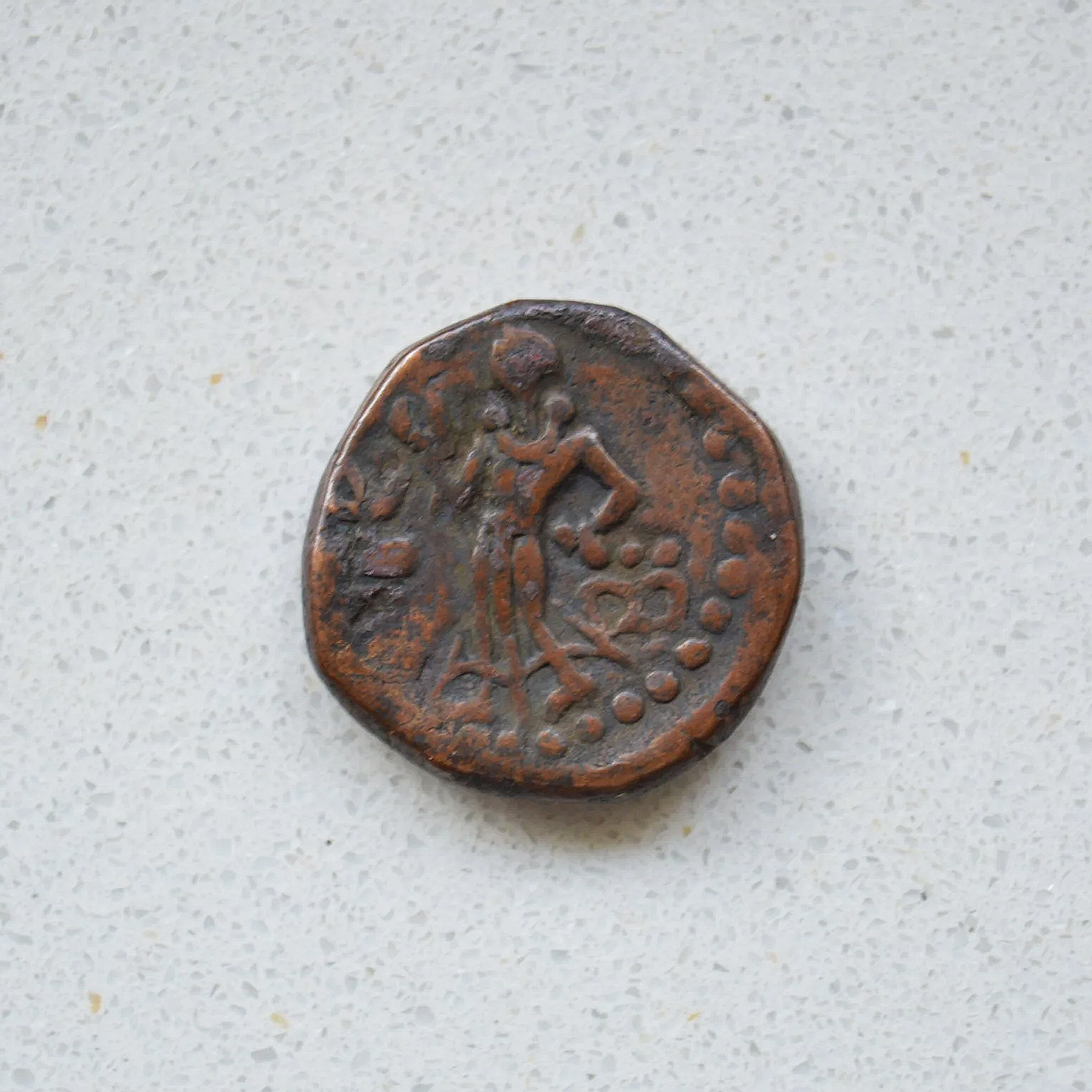 Image 2 of 2
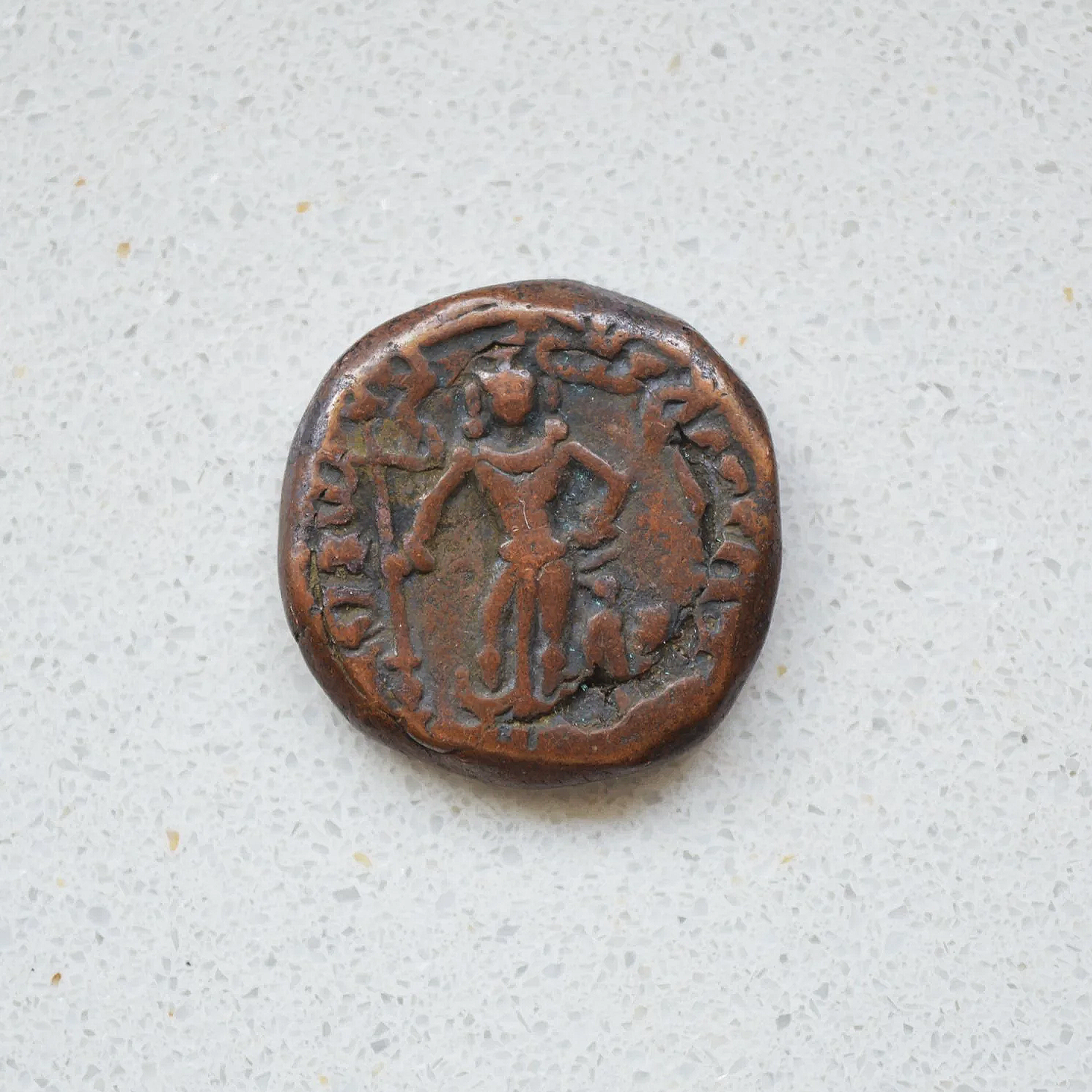
Offered is a fascinating 4th century AD 24mm copper Karshapana (sometimes referred to as a Drachm) issued for use in Yaudheya, being of the Class II ‘Karttikeya / Devasena’ type, MACW#4711-15, ACR#1127. The obverse depicts Karttikeya (Hindu god of war) surrounded by the inscription ‘victory to the Yaudheya people,’ while the reverse depicts Devasena (Hindu goddess of aspirations) flanked by a ‘Kalasha’ (symbolic planted pot) and inverted ‘nandipada’ (bull’s hoof).
Yaudheya operated through most of it’s lengthy existence (5th c. BC - 4th c. AD) as an autonomous client state to more powerful neighbouring empires. This being said, there are numerous recorded examples of Yaudheyan impunity, which appears to have gone unpunished - perhaps an indication of prudent leadership which was able to gauge when circumstances would allow for the assertion of Yaudheyan independence. Interestingly, Yaudheya appears to have operated as a federation of 3 tribal republics, which are thought to have at various times controlled the area from Bahawalpur all the way to Ludhiana (encompassing Delhi and Saharanpur).
This example is particularly nice for the type, displaying a full strike (including inscriptions) on an even plachet. A lovely chocolate patina rounds out this scarce and interesting piece.
Offered is a fascinating 4th century AD 24mm copper Karshapana (sometimes referred to as a Drachm) issued for use in Yaudheya, being of the Class II ‘Karttikeya / Devasena’ type, MACW#4711-15, ACR#1127. The obverse depicts Karttikeya (Hindu god of war) surrounded by the inscription ‘victory to the Yaudheya people,’ while the reverse depicts Devasena (Hindu goddess of aspirations) flanked by a ‘Kalasha’ (symbolic planted pot) and inverted ‘nandipada’ (bull’s hoof).
Yaudheya operated through most of it’s lengthy existence (5th c. BC - 4th c. AD) as an autonomous client state to more powerful neighbouring empires. This being said, there are numerous recorded examples of Yaudheyan impunity, which appears to have gone unpunished - perhaps an indication of prudent leadership which was able to gauge when circumstances would allow for the assertion of Yaudheyan independence. Interestingly, Yaudheya appears to have operated as a federation of 3 tribal republics, which are thought to have at various times controlled the area from Bahawalpur all the way to Ludhiana (encompassing Delhi and Saharanpur).
This example is particularly nice for the type, displaying a full strike (including inscriptions) on an even plachet. A lovely chocolate patina rounds out this scarce and interesting piece.