
 Image 1 of 4
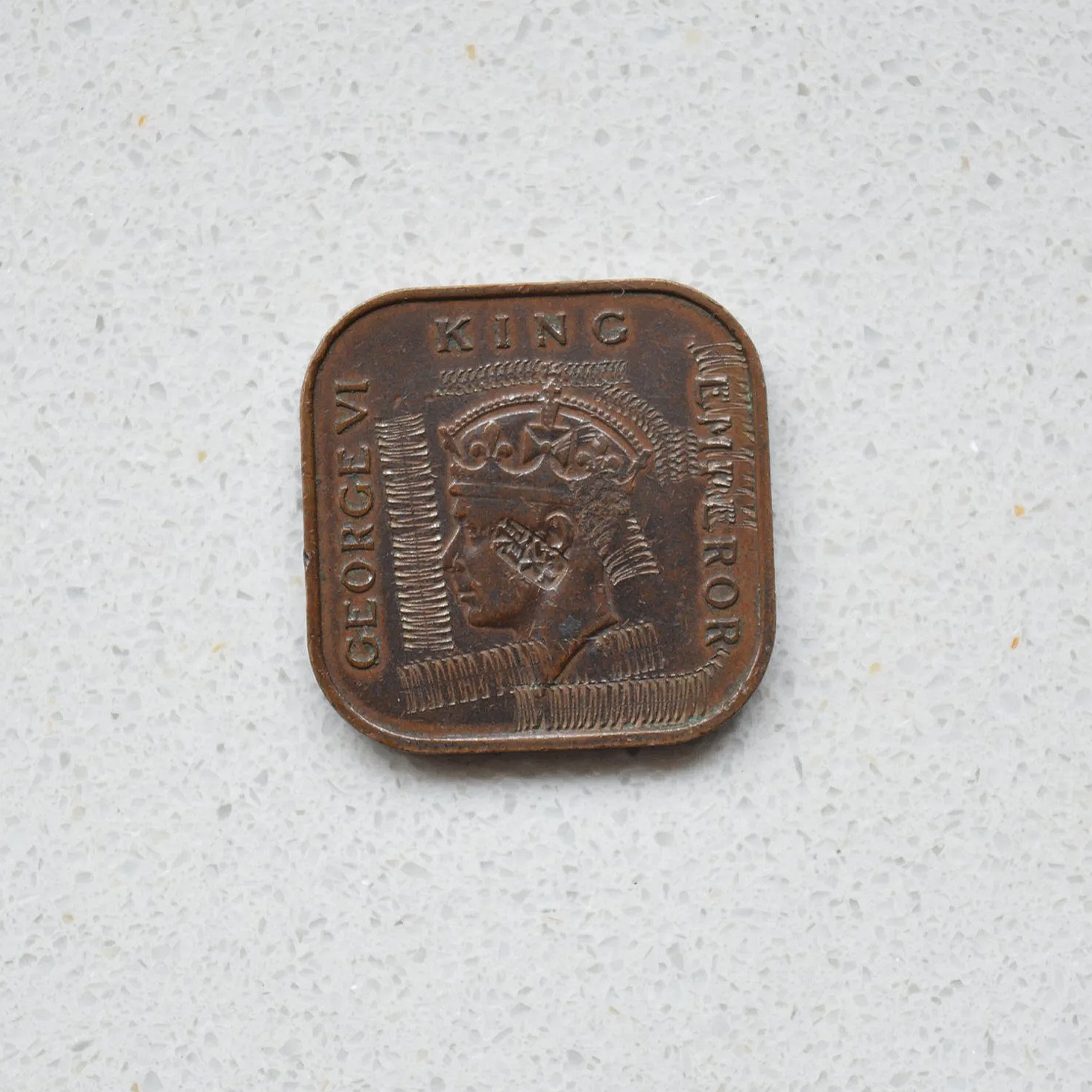 Image 2 of 4
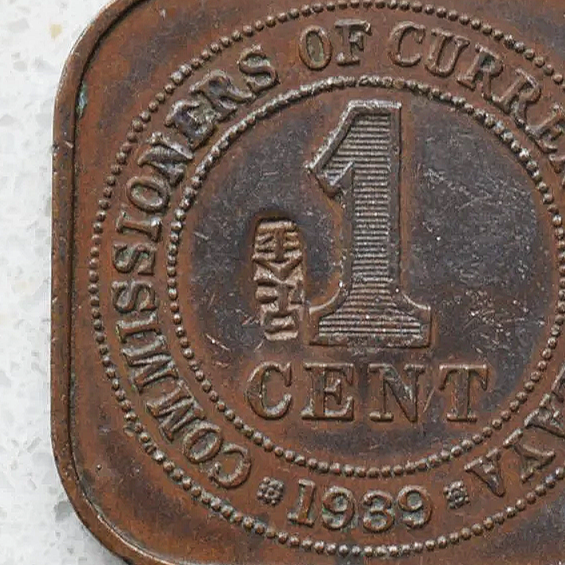 Image 3 of 4
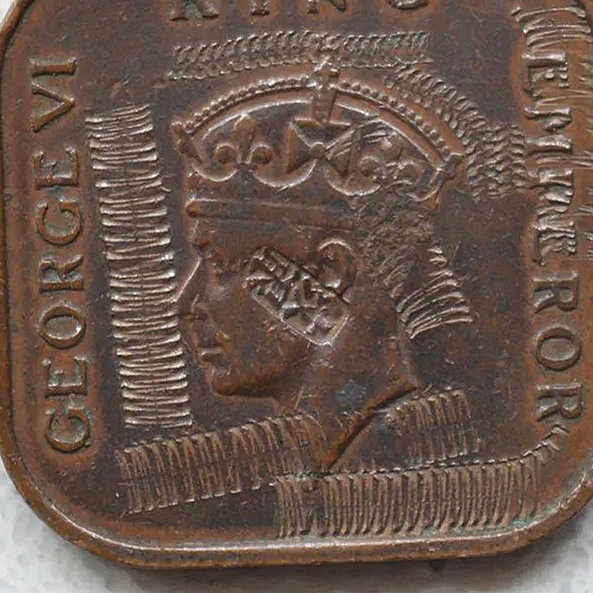 Image 4 of 4
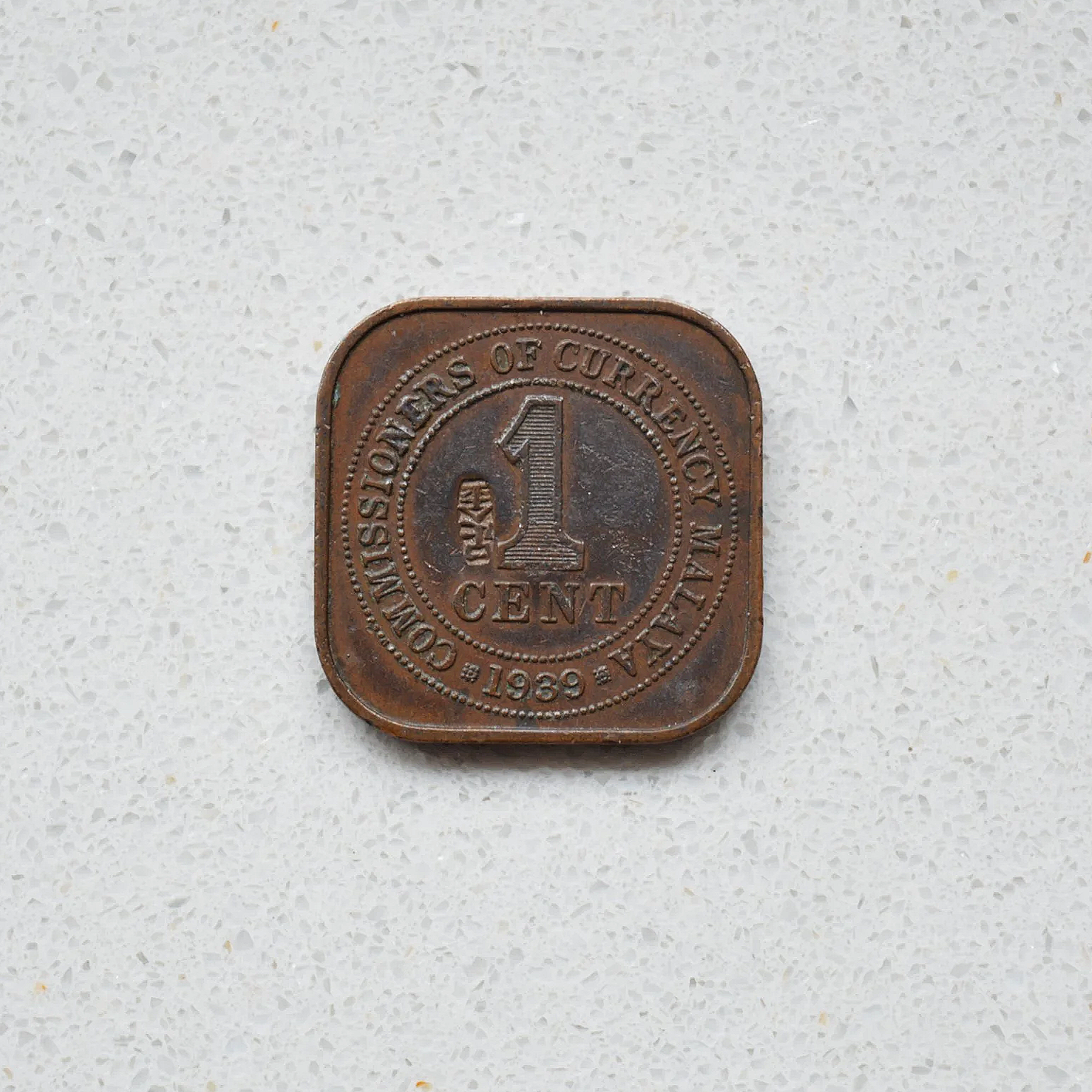
Offered is a fascinating countermarked King George VI Cent, which has been privately countermarked both obverse and reverse, KM#2. The reverse mark reads ‘ZUJIN’ or ‘Pure Gold',’ while the obverse reads ‘HANYIN’ or ‘Chinese Silver',’ both being in Chinese. Extensive Chinese settlement in the Straits began in the 18th century, generally being craftsmen and merchants, they quickly integrated with local communities, often marrying Malay women. This community became known as Peranakan, and by the time of British rule in the area, they had become renounced for silversmithing - indeed, the late 19th century though to the Second World War is known as the golden age of Peranakan silver.
Straits silver used a variety of hallmarking systems, with Peranakan, English, Chinese, and Malay marks all observed. It would seem that this piece was used to test a pair of Chinese hallmarking punches - indeed, the punches seem fresh, and the slight wear consistent with the coin overall would seem to indicate that a new host coin was used. Thusly, we can discern that a Peranakan silversmith punched this coin pretty well on the eve of WWII - a conflict which would prove devastating to this community. In all, a fascinating historical snapshot.
Offered is a fascinating countermarked King George VI Cent, which has been privately countermarked both obverse and reverse, KM#2. The reverse mark reads ‘ZUJIN’ or ‘Pure Gold',’ while the obverse reads ‘HANYIN’ or ‘Chinese Silver',’ both being in Chinese. Extensive Chinese settlement in the Straits began in the 18th century, generally being craftsmen and merchants, they quickly integrated with local communities, often marrying Malay women. This community became known as Peranakan, and by the time of British rule in the area, they had become renounced for silversmithing - indeed, the late 19th century though to the Second World War is known as the golden age of Peranakan silver.
Straits silver used a variety of hallmarking systems, with Peranakan, English, Chinese, and Malay marks all observed. It would seem that this piece was used to test a pair of Chinese hallmarking punches - indeed, the punches seem fresh, and the slight wear consistent with the coin overall would seem to indicate that a new host coin was used. Thusly, we can discern that a Peranakan silversmith punched this coin pretty well on the eve of WWII - a conflict which would prove devastating to this community. In all, a fascinating historical snapshot.